

A DNA test result can settle a question that has hung over a family for years, support a custody case, or complete an immigration file. That weight is why the phrase “99.9 percent accurate” deserves more scrutiny than it usually gets. Accuracy in Canadian DNA testing is not one number on a report. It is the product of accreditation, laboratory protocols, sample handling, and honest communication about what a test can and cannot prove.
What Accuracy Actually Means in a DNA Test Report
Accuracy means different things depending on the question being asked. A paternity test that confirms a biological relationship is typically reported at over 99.9 percent accuracy, and accredited laboratories reach that figure by testing multiple genetic markers rather than a single one. A test that excludes a relationship is a different kind of result altogether, and the strength of that exclusion depends on how many markers were analysed and how the laboratory interprets them.
That is why two reports can both say “accurate” and mean very different things. A result generated by an accredited laboratory that tests a broad panel of markers and verifies its findings is not equivalent to a result from a service that never explains its methodology. Readers who want to compare labs should look at the accreditation behind the report, not just the headline percentage.
Accreditation Is the Backbone of Reliable Canadian DNA Testing
Accreditation is the mechanism that turns a laboratory’s own claims into something a third party has verified. It means an outside body has reviewed how the lab operates, how it handles samples, and how it reports results, then confirmed that those practices meet an internationally recognised standard.
How the Standards Council of Canada Program Works
The Standards Council of Canada offers a DNA Relationship Testing specialty area under its Testing and Calibration Laboratories Accreditation Program. That program is based on ISO/IEC 17025, the international standard for testing and calibration laboratories. The management system requirements in ISO/IEC 17025 meet the principles of, and align with, ISO 9001, the most widely used quality management system standard.
Labs in Canada also advertise other credentials, including AABB and CLIA recognition, alongside ISO 17025 status. Each of these marks carries a different scope, so it helps to ask which specific programs cover the test being ordered. Accreditation ensures that testing laboratories provide reliable, third-party verified results, which strengthens their credibility and their industry reputation.
Why IRCC and the Courts Ask About Accreditation
Immigration, Refugees and Citizenship Canada only accepts DNA test results from laboratories that meet the accreditation requirements described by the Standards Council of Canada. That single fact explains why immigration DNA testing looks different from a curiosity test ordered online. The paperwork, the sample collection, and the reporting chain all have to survive outside review.
Court-admissible legal testing follows a similar logic. A judge needs to know who collected the sample, how it was sealed, and whether it was ever left unattended. Accreditation is what makes those answers verifiable instead of merely promised.
Inside the Laboratory: Where Accuracy Is Built
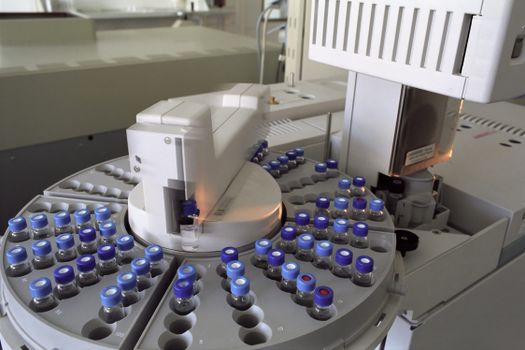
Reliable results come from repeated, unglamorous procedures. The details vary by laboratory, but the core practices that separate accredited testing from informal testing are consistent enough to describe.
Testing More Genetic Markers
One Canadian laboratory advertises a 21 loci test, meaning 21 specific locations in the DNA are examined and compared. Testing more markers increases the confidence a laboratory can place in its conclusion. When a result confirms a biological relationship, accredited labs test multiple genetic markers to ensure reliability, which is how they reach reported accuracy above 99.9 percent.
Running Every Sample Twice
Some accredited laboratories state that all DNA tests are run twice to support accuracy, with results returned in one to two business days. Repeat testing guards against a contaminated swab, a labelling error, or an ambiguous reading at a single marker. When both runs agree, the laboratory has two independent reasons to stand behind the conclusion.
Chain of Custody for Legal and Immigration Tests
For a legal or immigration file, the sample itself becomes evidence. Chain of custody protocols track who collected the sample, when it was collected, and how it moved from the collection point to the laboratory bench. Canadian providers often pair this with collection by certified DNA specialists, and one national provider describes its testing as 99.99 percent accurate when samples are collected by certified DNA specialists. The distinction matters: the accuracy claim is tied to the collection process, not just the analysis.
When DNA Testing Accuracy Breaks Down
Not every company offering a DNA test operates like a laboratory. Some sell ancestry estimates or relationship answers through the mail with little outside oversight, and the gap between marketing and methodology is where problems appear.
Direct-to-Consumer Tests and the Regulation Gap
The Office of the Privacy Commissioner of Canada noted in December 2017 that direct-to-consumer genetic tests are not specifically regulated and that there is no assurance the results are accurate. That statement was about a broad category of consumer products, and it remains a useful caution. A consumer test may be perfectly legitimate, but the buyer has no independent verification of the science behind it.
The Dog DNA Case as a Cautionary Example
A CBC News investigation published in June 2018 illustrated how far the gap can stretch. A man who doubted a Toronto-based ancestry laboratory submitted a sample from his girlfriend’s dog. The company returned results indicating the dog shared the same Indigenous ancestry as the man. In the same investigation, three CBC employees were told they each had 20 per cent Native American DNA. The episode became a widely cited example of what happens when a laboratory’s claims cannot be checked.

Reading the Percentages: 99.9, 99.99 and 99.999
Canadian laboratories advertise a range of figures. Relationship testing is often described as over 99.9 percent accurate, some providers cite 99.99 percent when samples are collected by certified specialists, and at least one advertises results reaching 99.999 percent or higher. Prices, for comparison, start around $199 at one national provider and $195 at another, with ancestry kits priced around $129 before tax and shipping.
Those percentages are not laboratory error rates. An inclusion figure represents the probability that the tested person is the biological relative, calculated from the genetic markers that matched. A laboratory can report a very high probability while still having quality control procedures that catch mistakes. The number and the process answer two different questions, and a credible laboratory will explain both.
Screening Is Not the Same as Diagnostic
Accuracy claims in genetics need context from outside the paternity market as well. Choosing Wisely Canada notes that non-invasive prenatal testing (NIPT) is a highly sensitive and specific screening test, but is not diagnostic, and that false positive results can occur even in high-risk populations. A screening result points toward a possibility. A diagnostic result confirms it.
Relationship testing sits closer to the diagnostic end of that spectrum when an accredited laboratory has analysed a broad marker panel from properly collected samples. Ancestry and ethnicity estimates sit closer to the screening end. AncestryDNA, for example, uses microarray-based autosomal DNA testing and normally returns ethnicity and genealogy results in about six to eight weeks, with some features requiring a subscription. Treating a genealogy estimate as proof of a biological relationship is a category error that no laboratory can fix.
How to Check a DNA Testing Provider in Canada
Before ordering any test, a few checks separate accredited laboratories from everyone else:
-
Ask which accreditation covers the specific test, whether that is SCC DNA Relationship Testing accreditation, ISO/IEC 17025, AABB, or CLIA.
-
Confirm whether the test is for curiosity, legal, immigration, or forensic purposes, because the sample collection and documentation requirements differ.
-
Ask how many genetic markers are analysed and whether samples are run more than once.
-
For immigration files, confirm the laboratory meets the requirements the Standards Council of Canada describes, since IRCC only accepts results from labs that do.
-
For legal files, ask how chain of custody is documented and who collects the sample.
-
Read the privacy terms, especially for any test that involves uploading genetic data to a consumer platform.
The DNALAB has operated in Canada since 1998 and holds SCC accreditation, offering curiosity, legal, immigration, and forensic testing with all-inclusive pricing and fast turnaround. Whether a reader chooses that laboratory or another, the standard to apply is the same: verified accreditation, a clear methodology, and a straight answer about what the result can prove.
Frequently Asked Questions
Are DNA test results 100 percent accurate?
No test carries an absolute guarantee. Accredited Canadian laboratories report relationship results above 99.9 percent accuracy, and some advertise figures of 99.99 percent or higher when samples are collected by certified specialists. Those numbers describe the probability attached to a confirmed relationship rather than a promise of perfection. The Office of the Privacy Commissioner of Canada has cautioned that direct-to-consumer genetic tests are not specifically regulated and their accuracy is not assured.
Can a 99.9 percent paternity test be wrong?
An inclusion result at that level is extremely unlikely to be wrong, but the figure is a probability, not an error rate. Mistakes are more often traced to the sample than the science: a swapped swab, a mislabelled envelope, or a sample collected from the wrong person. Accreditation, certified collection, and repeat testing of every sample are the safeguards that reduce that risk.
What does ISO 17025 accreditation mean for a DNA laboratory?
ISO/IEC 17025 is the international standard for testing and calibration laboratories. In Canada, the Standards Council of Canada offers a DNA Relationship Testing specialty under its Testing and Calibration Laboratories Accreditation Program, which is based on that standard. Its management system requirements align with ISO 9001. Accreditation means an outside body has verified that the laboratory’s methods, staff, equipment, and reporting meet the standard.
Why does immigration DNA testing require an accredited laboratory?
Immigration, Refugees and Citizenship Canada only accepts DNA test results from laboratories that meet the accreditation requirements described by the Standards Council of Canada. Immigration files depend on documentation that can withstand review, so the sample collection, chain of custody, and final report all have to come from a laboratory whose processes have been independently verified rather than self-declared.
How long do DNA test results take in Canada?
Turnaround depends on the laboratory and the type of test. Some accredited Canadian laboratories report results in one to two business days once samples arrive. Ancestry and ethnicity products run on a much slower schedule, with one major provider stating that results normally take about six to eight weeks. Legal and immigration tests can take longer because collection appointments and documentation have to be completed first.
Anyone weighing a DNA test should treat accreditation as the first question and the percentage as the second. A high number printed by an unverified provider tells a reader very little, while an accredited laboratory with a clear methodology gives a result that holds up in a courtroom, an immigration file, or a family conversation.